Reduce relevant impacts with EIME
Ecodesign is an approach that consists of integrating the environment from the design phase of products or services.
The objective: compare production techniques and reduce environmental impacts!
The methodology for ecodesigning consists of comparing theoretical impact results between different ways of manufacturing the product or service, before launching into actual production.
 ISO 14062
-
1. Conduct the life cycle assessment
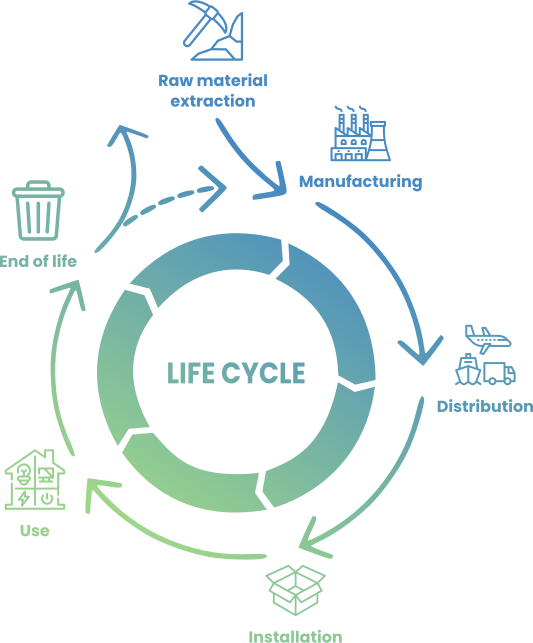
Life Cycle Assessment (LCA) is a technique that allows you to assess the environmental impacts associated with all stages of a product's life, from raw material extraction through transformation, manufacturing, distribution, use, repair and maintenance, then disposal or recycling.
This multi-step quantitative "cradle to grave" and multi-criteria method will allow you to launch your ecodesign projects.

EIME supports you in this step:
EIME software guides you step by step in modeling the life cycle of your products and services.
EIME has so-called "configurable" data that allows you to adapt the electricity mix of a data set to a specific geographic area. These configurable data are available for manufacturing processes.
It is possible to copy/paste a folder or component from one case study to another.
It is also possible to convert a case study into a system. Systems are then visible from the data library and can be added with one click to your modeling.
-
2. Duplicate and modify your case studies
EIME supports you in this step:
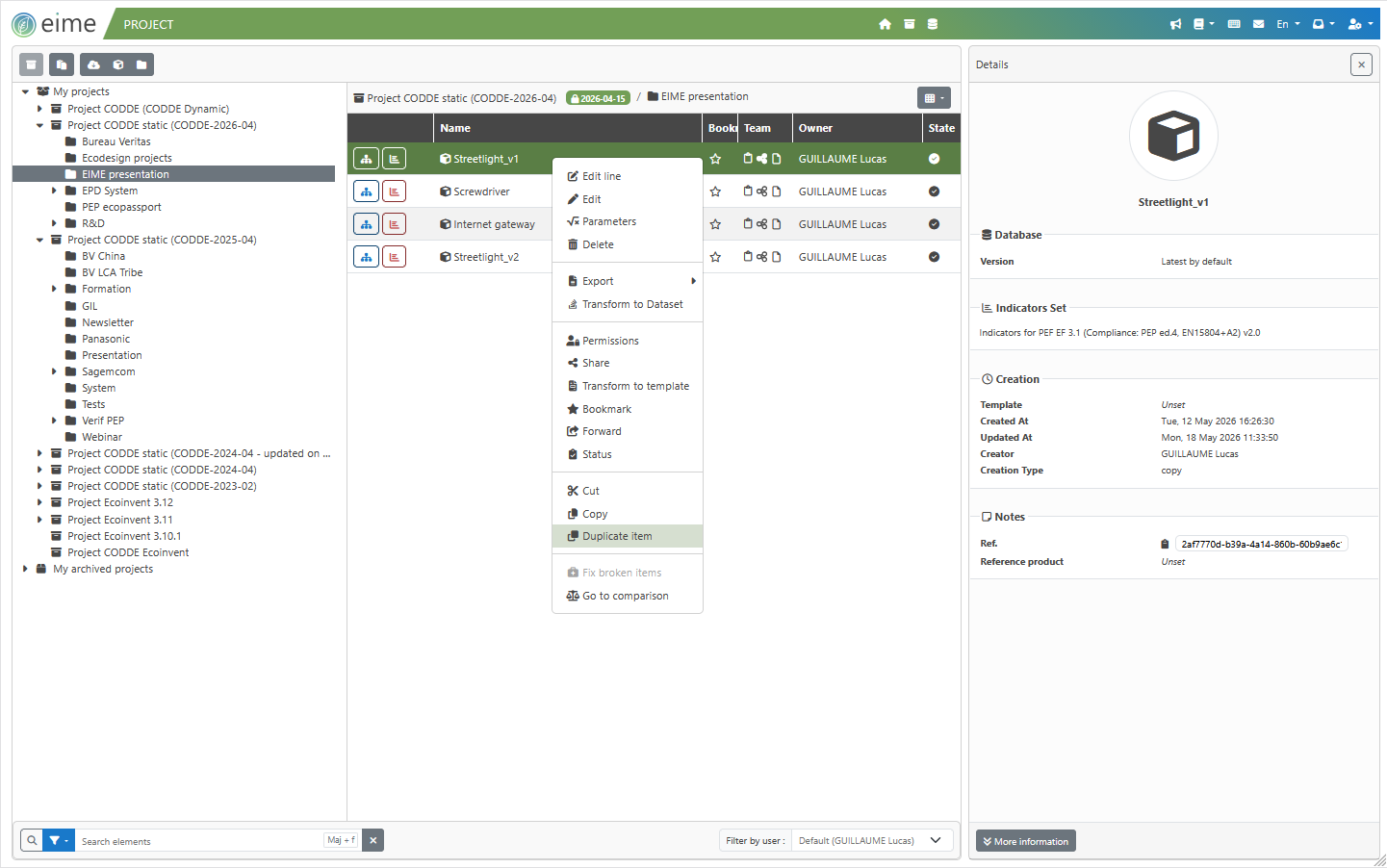
In EIME software you can duplicate your studies in 1 click to modify and adapt the design of your products and services.
-
3. Compare impact results
EIME supports you in this step:
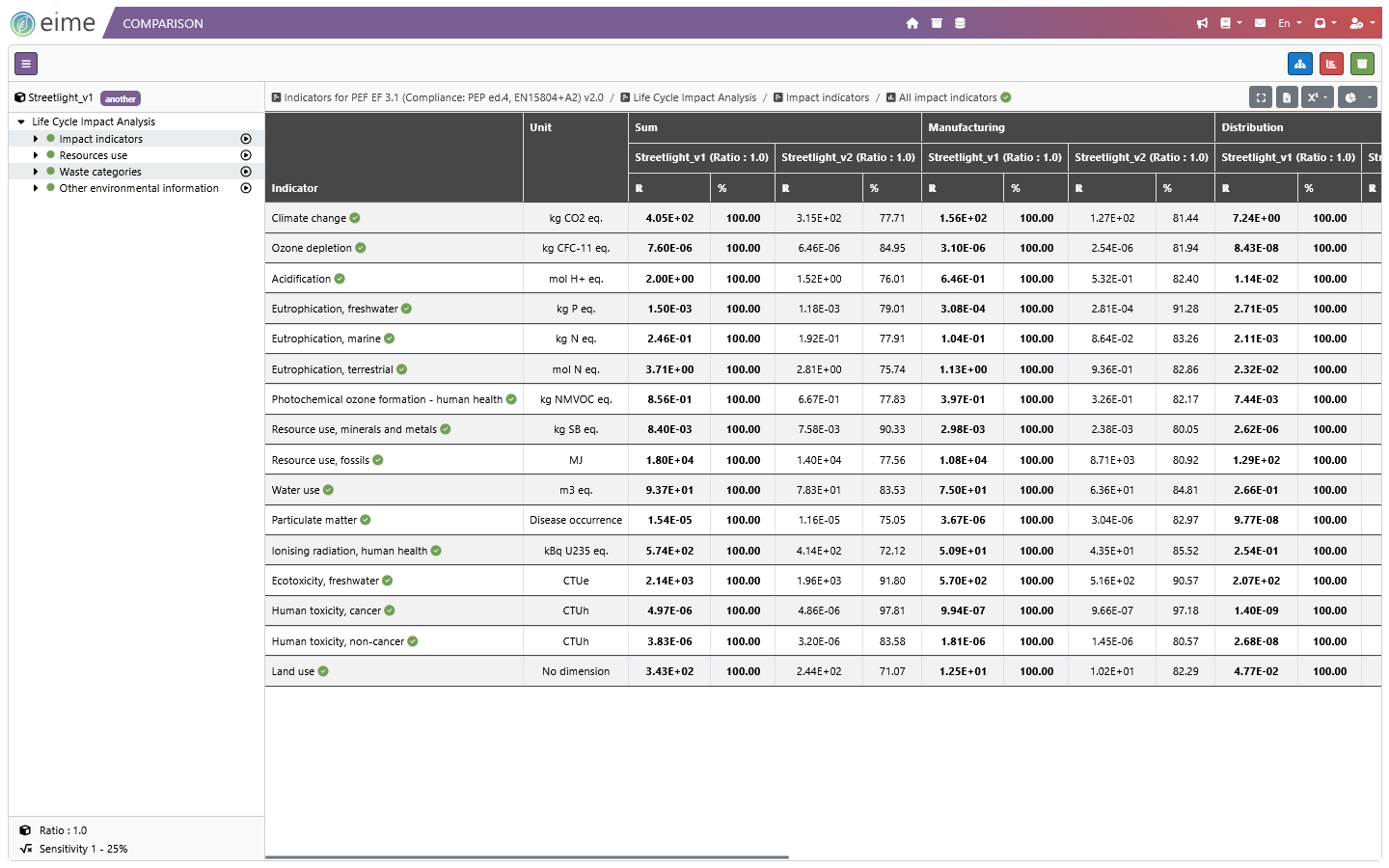
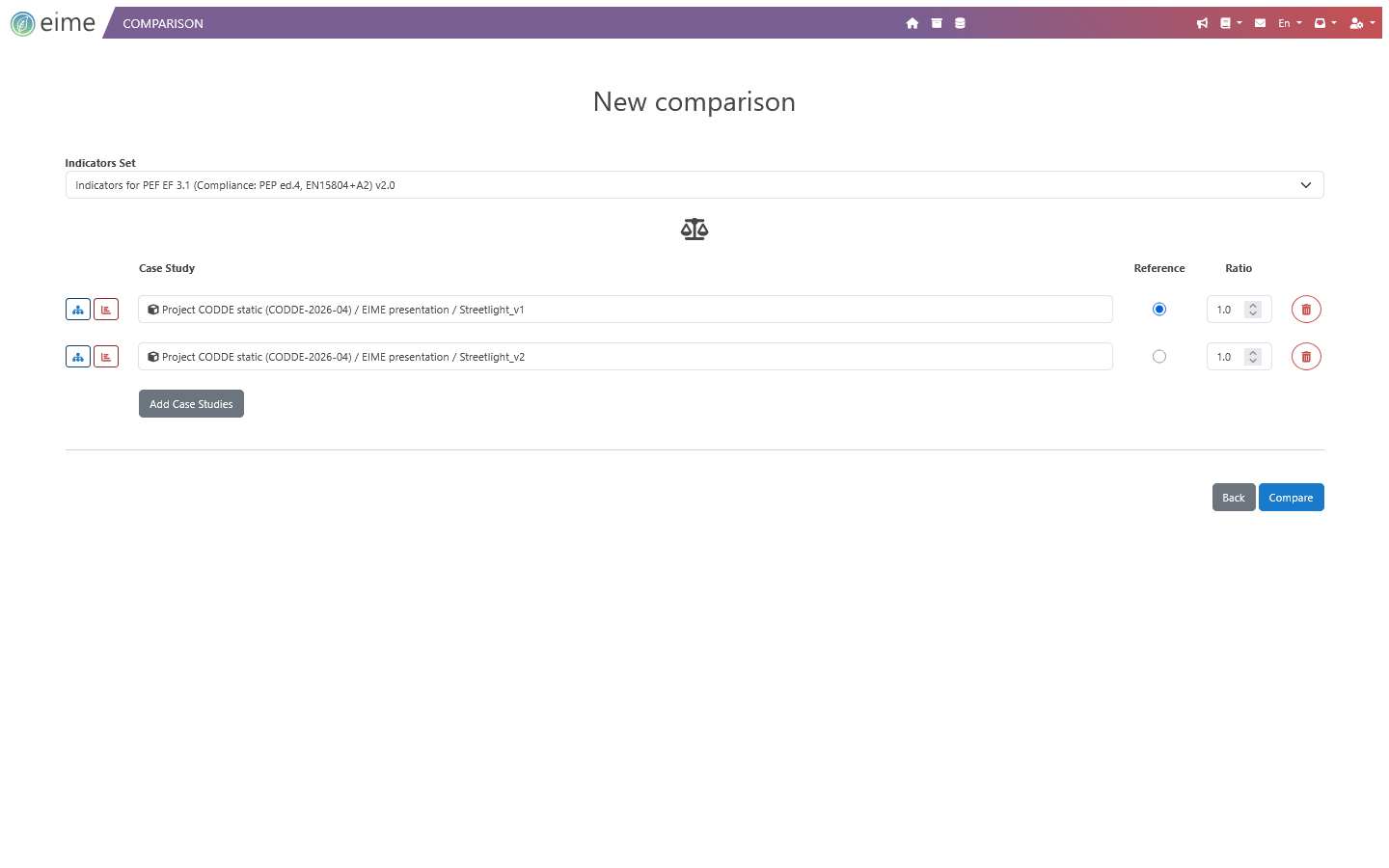
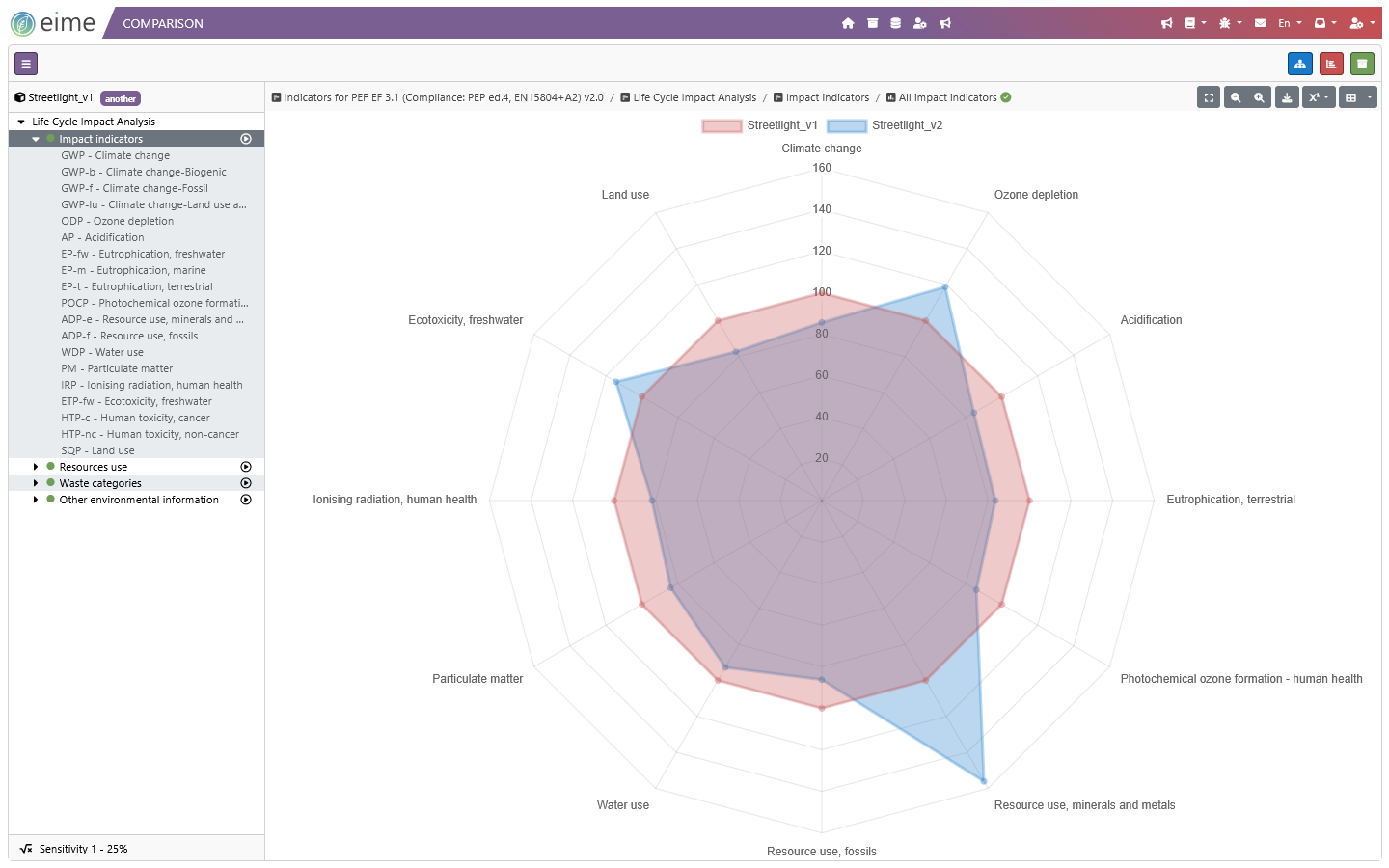
EIME software has a 100% dedicated comparison interface to allow you to find the best ecodesign alternatives.
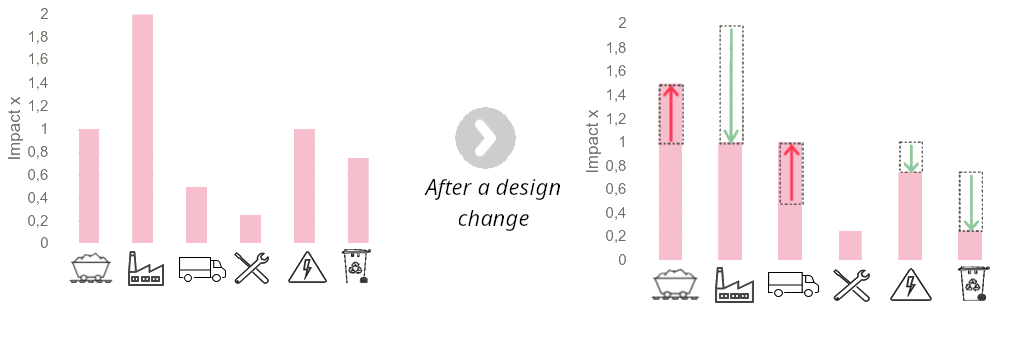
You can reason using multiple criteria to avoid improving one impact while degrading another and think life cycle to avoid pollution transfers to another stage of the life cycle.
-
4. Make appropriate decisions
Once comparisons are complete, you will be able to make appropriate R&D decisions.
-
1. Conduct the life cycle assessment
Life Cycle Assessment (LCA) is a technique that allows you to assess the environmental impacts associated with all stages of a product's life, from raw material extraction through transformation, manufacturing, distribution, use, repair and maintenance, then disposal or recycling.
This multi-step quantitative "cradle to grave" and multi-criteria method will allow you to launch your ecodesign projects.
EIME supports you in this step:
EIME software guides you step by step in modeling the life cycle of your products and services.
EIME has so-called "configurable" data that allows you to adapt the electricity mix of a data set to a specific geographic area. These configurable data are available for manufacturing processes.
It is possible to copy/paste a folder or component from one case study to another.
It is also possible to convert a case study into a system. Systems are then visible from the data library and can be added with one click to your modeling.
-
2. Duplicate and modify your case studies
EIME supports you in this step:
In EIME software you can duplicate your studies in 1 click to modify and adapt the design of your products and services.
-
3. Compare impact results
EIME supports you in this step:
EIME software has a 100% dedicated comparison interface to allow you to find the best ecodesign alternatives.
You can reason using multiple criteria to avoid improving one impact while degrading another and think life cycle to avoid pollution transfers to another stage of the life cycle.
-
4. Make appropriate decisions
Once comparisons are complete, you will be able to make appropriate R&D decisions.